Why Your Phone Charger Matters: Safety, Fast Charging, and USB-C Explained
When buying a new smartphone, most of us spend time comparing cameras, battery life, displays, and performance. But one important accessory often gets overlooked: the charger.
Not all phone chargers are created equal. Although two chargers may look nearly identical, their internal components, safety features, power capabilities, and charging performance can be very different.
Understanding these differences can help you charge your devices safely, efficiently, and reliably.
1. Why Charger Quality Matters
A charger does more than deliver electricity to your phone. It converts household AC power into the DC power your device needs while managing voltage, current, heat, and electrical protection.
A properly designed charger includes safeguards against conditions such as overheating, overcurrent, short circuits, and abnormal voltage.
Poorly designed chargers may lack adequate protection or electrical isolation. That can increase the risk of excessive heat, equipment damage, or electrical hazards.
The takeaway: Choosing a charger based only on price or appearance can be a mistake. Safety and build quality matter.
2. Understanding Watts, Volts, and Amps
Three electrical measurements help explain how charging works:
-
Volts (V): Electrical potential, sometimes compared to pressure.
-
Amps (A): The amount of electrical current flowing.
-
Watts (W): The rate at which electrical energy is delivered.
The basic relationship is:
Watts = Volts × Amps
For example, a charger supplying 9 volts at 3 amps delivers 27 watts.
However, a charger rated for 30 watts does not continuously push 30 watts into every connected device. The actual power depends on the device's needs, the supported charging protocol, and the cable.
3. Can a Higher-Wattage Charger Damage Your Phone?
This is one of the most common charging questions.
Generally, no. A properly designed, compatible USB-C Power Delivery charger can safely charge a device that requires less power than the charger's maximum rating.
For example, a phone that draws 25 watts can be connected to a compatible 65-watt charger. The charger and phone negotiate an appropriate power level; the phone does not automatically receive 65 watts.
This is one reason a quality USB-C charger can be useful for multiple devices, including phones, tablets, and some laptops.
However, compatibility, proper USB-C implementation, and charger quality still matter.
4. What Are USB-C Power Delivery and PPS?
USB-C describes the connector, but it does not guarantee a particular charging speed.
USB Power Delivery (USB PD) is a charging standard that allows compatible devices and chargers to negotiate suitable power levels.
Programmable Power Supply (PPS) is an optional USB PD feature that allows compatible devices to request more precise adjustments to voltage and current.
PPS can help supported devices manage charging efficiently, potentially reducing unnecessary power conversion and heat.
To benefit from these technologies, your charger and device must support the relevant charging modes.
5. Why GaN Technology Matters
Gallium nitride, commonly called GaN, is a semiconductor material used in many modern power adapters.
Compared with traditional silicon-based designs, GaN technology can enable more compact, efficient chargers when paired with appropriate circuitry and thermal engineering.
This makes GaN particularly useful in higher-power chargers designed to serve multiple devices without requiring a large adapter.
But remember: GaN alone does not guarantee a charger is safe or well-built. Overall engineering, component selection, thermal management, and safety testing remain essential.
6. Understanding Charger Safety Certifications
When evaluating a charger, look beyond marketing claims.
Independent safety testing and certification can help demonstrate that a product meets applicable electrical safety requirements.
For example:
-
UL: A safety standards and certification organization. A product described as UL Listed should have a verifiable certification applicable to that product.
-
ETL: A certification mark issued by Intertek indicating that a product has been evaluated against applicable safety standards.
-
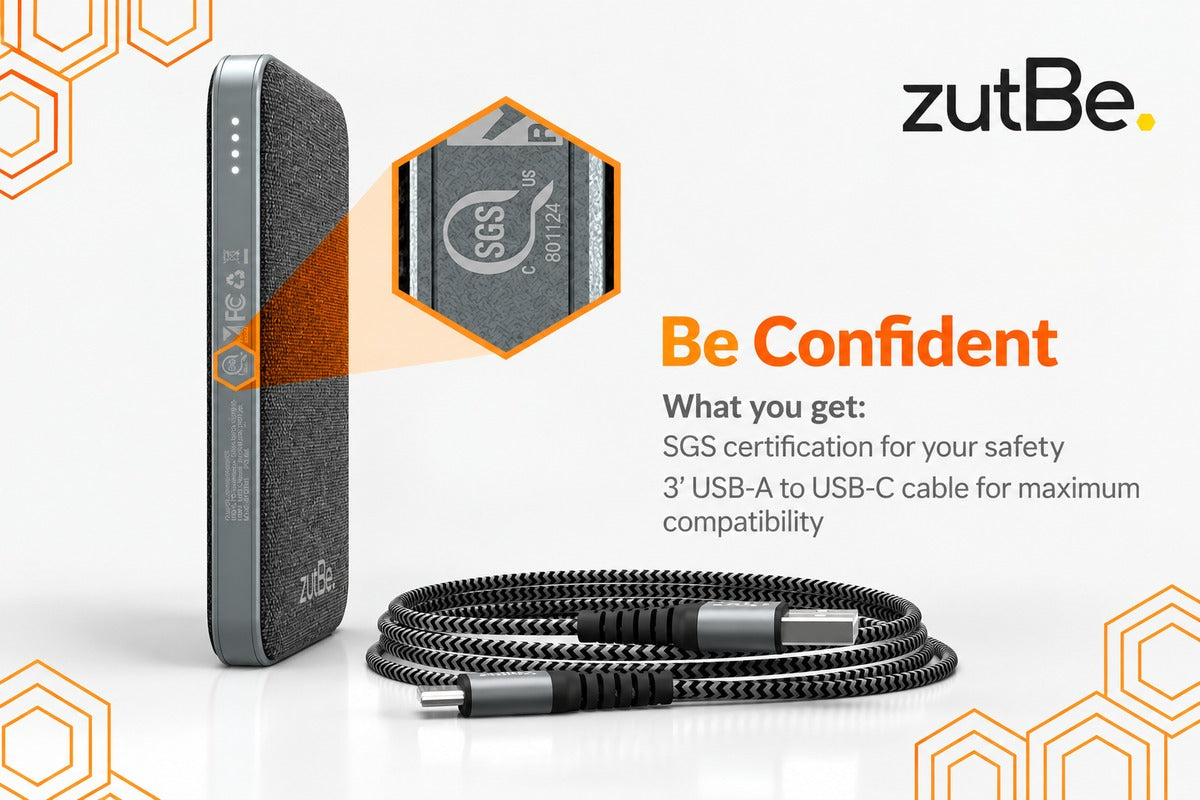
SGS: A testing, inspection, and certification organization that may provide product testing or certification services.
These organizations and marks do not all mean the same thing, and testing is not necessarily equivalent to certification.
Consumers should look for legitimate, product-specific safety marks and verify certifications when possible.
7. Don't Forget the Charging Cable
Even an excellent charger can be limited by the cable connecting it to your device.
Cable construction, electrical specifications, connector quality, and power ratings all influence performance and reliability.
Some USB-C cables support higher power levels than others. For certain higher-power USB-C charging applications, electronically marked cables, commonly called E-Marker cables, are required to identify the cable's capabilities.
A damaged, poorly constructed, or incorrectly rated cable can undermine the benefits of a quality charger.
8. How to Choose the Right Charger
Before purchasing your next charger, consider these questions:
-
Is it compatible? Check your device's supported charging standard and power requirements.
-
Does it offer enough power? Select a charger that can meet your device's charging needs.
-
Does it support USB PD or PPS? These features may be important for achieving your device's supported fast-charging performance.
-
Has it been independently safety certified? Look for verifiable product-specific certifications.
-
Is the cable appropriate? Match the cable's power rating and capabilities to your charger and device.
-
Do you need multiple ports? If so, check how the charger distributes power when more than one device is connected.
The zutBe Approach
At zutBe, we believe charging accessories should be designed around safety, durability, and dependable performance.
Our charging products are developed with attention to electrical protection, compatibility, and practical everyday use. We emphasize appropriate product testing, quality components, and clear specifications so customers can make informed decisions.
Whether you're charging a phone at home, powering multiple devices at your desk, or traveling with a compact adapter, the right charger makes a difference.
The bottom line: A charger is more than an accessory. It's an important part of how you power and protect the devices you rely on every day.
Power through Connection. — zutBe