
How a Power Bank Can Extend Your Phone's Battery Life and Keep an Older Phone Going
Your smartphone might still do everything you need it to do. It takes great photos, runs your favorite apps, handles your calls and messages, and keeps you connected throughout the day.
There's just one problem.
The battery doesn't last as long as it used to.
Maybe your phone was once able to make it from morning until bedtime on a single charge. Now you're searching for an outlet by midafternoon.
Or perhaps your phone is relatively new, but a busy day of navigation, video calls, photography, and streaming drains the battery faster than expected.
In either situation, a portable power bank can make a significant difference.
And for someone with an older smartphone, it may even help postpone an expensive battery replacement or phone upgrade.
Let's look at how.
1. Why Your Phone Battery Doesn't Last Forever
Most modern smartphones use rechargeable lithium-ion batteries.
These batteries are compact, lightweight, and capable of storing substantial energy, making them well suited for mobile devices.
But like all rechargeable batteries, they gradually lose some of their original capacity as they age.
Every time you charge and discharge your phone, its battery experiences wear. Temperature, charging habits, usage patterns, and the passage of time also affect battery health.
Over the years, you may notice:
-
Your phone needs charging more frequently.
-
Battery percentage drops faster during demanding activities.
-
Your phone struggles to last through a full day.
-
Performance may be affected when an aging battery cannot deliver sufficient power.
-
The battery percentage may become less predictable.
This doesn't necessarily mean your phone has reached the end of its useful life.
The processor, camera, display, and other components may still work perfectly well.
Sometimes the battery is the main reason an otherwise capable phone becomes inconvenient to use.
2. A Power Bank Gives Your Phone a Second Source of Energy
A power bank is essentially a rechargeable battery designed to supply electrical power to other devices.
You charge the power bank ahead of time, then use it to recharge your smartphone, tablet, headphones, or other compatible electronics when needed.
Instead of depending entirely on your phone's internal battery, you have an additional source of energy available throughout the day.
Think of it as carrying extra fuel for your phone.
When your battery starts running low, you connect the power bank and continue using your device.
This is especially useful when you're away from a wall outlet.
A power bank doesn't increase the actual capacity of your phone's internal battery or reverse battery aging.
It extends the time you can use your phone before you need access to another charging source.
That's an important difference.
3. How a Power Bank Can Help You Keep an Older Phone Longer
Let's say you have a smartphone that's three or four years old.
It still works well. You like its size, camera, and features. It receives the software updates you need, and you have no compelling reason to replace it.
But the battery no longer lasts all day.
You now face several choices:
-
Replace the phone's battery.
-
Purchase a new smartphone.
-
Continue carrying a charging cable and searching for outlets.
-
Use a portable power bank to supplement the aging battery.
For many people, a power bank is a practical and relatively inexpensive option.
Instead of replacing an otherwise functional phone immediately, you can recharge it during the day when necessary.
This may allow you to continue using the device comfortably for months or longer, depending on its condition and your needs.
It can also give you time to decide whether a battery replacement or a new phone is the better long-term investment.
When should you replace the battery instead?
A power bank isn't always the right solution.
If your phone shuts down unexpectedly, becomes unusually hot, has a swollen battery, or shows serious battery-related performance problems, it should be evaluated for service.
A swollen or damaged battery requires particular attention. Stop using or charging the affected device and seek qualified service.
If you plan to keep your phone for several more years, replacing a significantly degraded battery may be more convenient than relying on external power every day.
A power bank can postpone the need for a battery replacement, but it cannot repair a failing battery.
4. A Power Bank Isn't Just for Older Phones
Even a brand-new smartphone can run out of power before the day is over.
Modern phones are powerful devices, and some of their most useful features also consume considerable energy.
Consider a typical busy day.
You use GPS navigation while driving, take photos and videos, join a video conference, listen to music, check emails, and browse social media.
By late afternoon, your battery may be running low.
A portable power bank lets you recharge without interrupting your schedule.
Situations where a power bank is especially useful
Travel: Airports, long flights, train rides, and sightseeing can make access to charging outlets unpredictable.
Work: Salespeople, delivery drivers, field technicians, and other mobile professionals depend on their phones throughout the day.
Outdoor activities: Hiking, camping, golf, and sporting events often take you away from convenient electrical outlets.
Family activities: Taking photos, recording videos, and coordinating plans can drain your battery faster than expected.
Emergencies: During a power outage or unexpected travel delay, a charged power bank can help keep essential communication devices operating.
For many people, a power bank has become just as useful as carrying a spare charging cable.
5. Understanding Power Bank Capacity: What Does 10,000 mAh Mean?
When shopping for a power bank, one of the first specifications you'll encounter is its capacity.
This is commonly expressed in milliamp-hours, or mAh.
For example, a power bank might be advertised as:
-
5,000 mAh
-
10,000 mAh
-
20,000 mAh
In general, a higher-capacity power bank stores more energy when comparing products with similar internal battery voltages, although it may also be larger and heavier.
A 10,000 mAh power bank offers a practical balance between portability and energy storage for everyday smartphone use.
Does 10,000 mAh mean two full charges for a 5,000 mAh phone?
Not necessarily.
The capacity printed on a power bank generally refers to the capacity of its internal battery cells.
When the power bank charges a phone, energy is lost through voltage conversion, heat, and the phone's own charging circuitry.
As a result, not all the stored energy reaches the phone's battery.
The number of charges you receive depends on:
-
Your phone's battery capacity.
-
The power bank's usable energy.
-
Conversion efficiency.
-
Charging conditions.
-
Whether you're using the phone while charging.
A 10,000 mAh power bank can provide substantial additional runtime for many smartphones, but the exact number of full charges varies.
For a more meaningful comparison between different battery systems, look at energy capacity in watt-hours (Wh), not just mAh.
6. Why Charging Speed Matters
Capacity tells you approximately how much energy a power bank can store.
Charging power tells you how quickly it can deliver that energy under compatible conditions.
Charging power is measured in watts.
A power bank supporting USB Power Delivery, or USB PD, can negotiate an appropriate charging arrangement with compatible devices.
This may allow faster charging than older basic USB charging methods.
For example, a power bank rated for 18W USB PD can deliver up to 18 watts to compatible devices under supported conditions.
However, actual charging speed depends on the phone, the cable, the power bank's supported output profiles, and battery conditions.
Your phone also controls how much charging power it accepts.
Why this matters when you're on the move
Imagine you're waiting at an airport or taking a short break between meetings.
You may have only 20 or 30 minutes to recharge.
A compatible fast-charging power bank can make those minutes more useful by replenishing energy more quickly than a slower charging setup.
But remember that charging naturally slows as the battery fills, and the phone may reduce charging power when temperatures rise.
A higher advertised wattage doesn't guarantee faster charging unless your device supports it.
7. Can a Power Bank Charge More Than Your Phone?
Absolutely.
Many modern portable electronics use USB charging.
Depending on the power bank's ports, output capacity, and device requirements, it may be able to charge:
-
Smartphones.
-
Wireless earbuds and headphones.
-
Tablets.
-
Bluetooth speakers.
-
Portable gaming accessories.
-
Digital cameras and other compatible electronics.
Some laptops can also charge from sufficiently powerful USB-C PD power banks, although many ordinary smartphone-oriented power banks don't provide enough output power for laptop charging.
It's important to check compatibility rather than assuming every USB-C device will charge properly from every power bank.
A portable charger designed primarily for smartphones may be excellent for mobile accessories but unsuitable for a laptop that requires significantly more power.
8. Power Bank Safety: Why Independent Certification Matters
Power banks contain rechargeable lithium-ion batteries that store a considerable amount of energy in a compact enclosure.
That's what makes them useful.
It also makes proper design, manufacturing, and safety testing especially important.
A poorly designed or damaged lithium-ion battery product can present risks, including overheating, electrical faults, and, in severe cases, fire.
When choosing a power bank, look beyond its capacity and price.
Consider the manufacturer's safety information, product specifications, protective circuitry, and independent testing or certification.
What is UL 2056?
UL 2056 is a safety standard developed specifically for power banks.
It establishes requirements intended to address important electrical, mechanical, and battery-related safety hazards associated with portable battery power supplies.
Testing against this standard evaluates how a product performs under specified conditions, including conditions intended to identify potential safety risks.
How is the zutBe PowerTrip certified?
The zutBe PowerTrip portable charger has been independently tested and certified by SGS Laboratories to the UL 2056 safety standard for power banks.
SGS is an independent testing, inspection, and certification organization.
This certification means that the PowerTrip has undergone third-party evaluation against the applicable requirements of the UL 2056 standard.
It is important to distinguish this from a claim that the product is certified by UL Solutions itself. In this case, the certification is provided by SGS to the UL 2056 standard.
At zutBe, we believe independent safety evaluation is particularly important for products containing lithium-ion batteries.
Consumers cannot easily inspect the battery cells, protective circuitry, or internal construction of a sealed power bank.
Independent certification provides an additional level of assurance beyond the manufacturer's own marketing claims.
Basic power bank safety tips
-
Avoid exposing your power bank to excessive heat or direct sunlight for extended periods.
-
Never leave it in a hot vehicle.
-
Stop using it if the enclosure becomes swollen, damaged, or unusually hot.
-
Use compatible charging cables and power adapters.
-
Keep charging ports free of moisture and debris.
-
Follow the manufacturer's charging and storage instructions.
For air travel, power banks generally belong in carry-on baggage rather than checked luggage, subject to applicable airline and aviation rules.
Choosing a properly designed power bank with independent safety certification is an important part of responsible portable charging.
9. Introducing the zutBe PowerTrip Portable Charger
At zutBe, we believe portable power should be convenient, dependable, and designed with safety in mind.
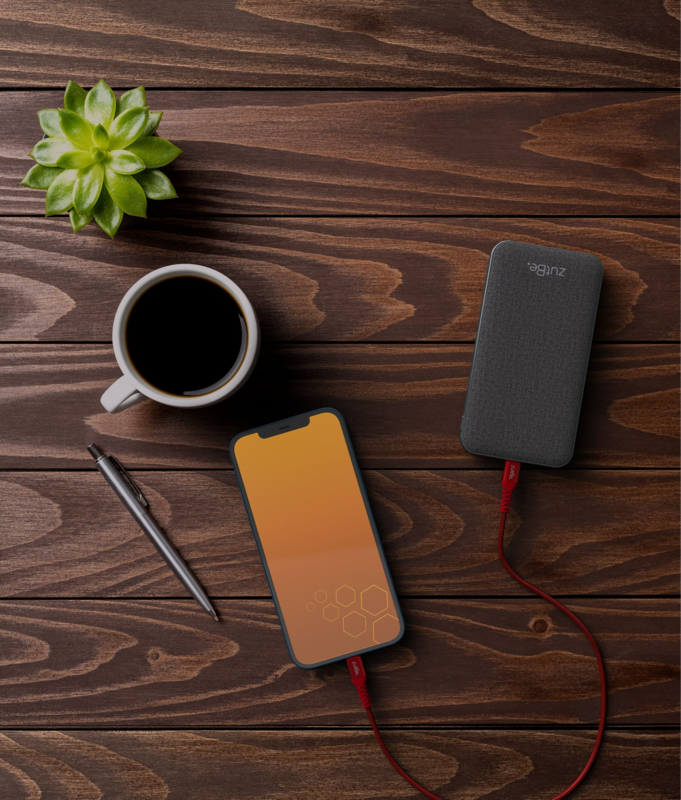
The zutBe PowerTrip is a compact portable charging solution designed for everyday mobile-device users.
Its key specifications include:
10,000 mAh battery capacity: Provides additional stored energy for charging compatible devices away from an outlet.
37 Wh energy capacity: A useful measure of the energy stored in the internal battery.
Up to 18W USB Power Delivery: Supports compatible fast-charging devices.
SGS certification to UL 2056: Independently tested and certified by SGS Laboratories to the UL 2056 power bank safety standard.
Portable design: Intended for use during commuting, travel, work, and everyday activities.
Whether you're trying to keep an older smartphone going or simply want extra power during a busy day, the PowerTrip offers a convenient way to recharge when a wall outlet isn't available.
Our goal isn't to convince customers they need a new phone.
It's to help them get more value and usefulness from the devices they already own.
10. Power Bank or Battery Replacement: Which Is the Better Choice?
Both options have advantages.
Choose a power bank when:
-
Your phone still works well, but occasionally needs additional charging.
-
You travel or spend long periods away from electrical outlets.
-
You want a portable charger that can also support other devices.
-
You're not ready to replace your phone's battery.
-
You want backup power for unexpected situations.
Consider replacing the battery when:
-
Your phone's battery health has deteriorated significantly.
-
You need reliable all-day use without carrying an external charger.
-
Your phone experiences battery-related shutdowns or performance problems.
-
You intend to keep the device for several more years.
-
The cost of battery replacement is reasonable compared with buying a new phone.
These choices aren't mutually exclusive.
You can replace an aging phone battery and still benefit from carrying a power bank during travel or especially demanding days.
The best solution depends on your phone's condition, your daily routine, and how long you plan to keep the device.

11. Keeping Your Phone Longer Can Have Other Benefits
Extending the useful life of a smartphone can offer advantages beyond convenience.
Manufacturing electronic devices requires raw materials, energy, transportation, and complex supply chains.
Keeping a functional device in service longer may reduce the need for an immediate replacement.
It can also help you avoid spending hundreds of dollars on a new phone when your current one still meets your needs.
Of course, battery replacement, software support, security updates, repair costs, and overall device condition should all factor into the decision.
A power bank doesn't solve every issue associated with an aging smartphone.
But when limited battery runtime is the main inconvenience, it can be a simple way to keep the device useful.
12. The Bottom Line: More Power, More Freedom
A power bank is more than an emergency charger.
It's a practical accessory that can help you stay connected throughout a busy day, reduce dependence on wall outlets, and make an older smartphone more convenient to use.
For some people, it provides peace of mind during travel.
For others, it means finishing a workday without worrying about the battery percentage.
And for someone whose older phone still works well, it may provide the flexibility to postpone a battery replacement or expensive upgrade.
The key is choosing a power bank with the right capacity, compatible charging capabilities, appropriate safety certification, and dependable manufacturer support.
Sometimes getting more life out of your phone doesn't require buying a new phone. It simply requires having more power available when you need it.
Power through Connection.
zutBe