
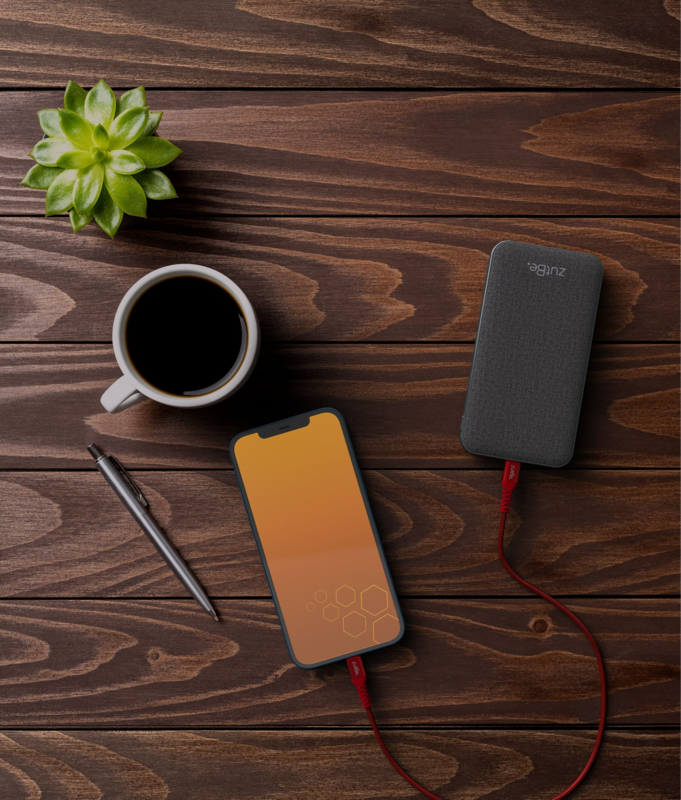

Two charging cables can look almost identical.
They may have the same connectors, the same length, and even the same advertised charging speed. One might cost a few dollars, while the other costs considerably more.
So what's the difference?
The answer isn't always visible.
Inside every charging cable are conductors, insulation, connectors, and other components that affect its electrical performance, reliability, and durability. In certain cables, specialized electronic components also help devices identify the cable's capabilities.
But how can consumers know what they're actually buying?
Understanding certification is a good starting point. Knowing what certification does—and doesn't—tell you is just as important.
1. The Hidden Problem With Counterfeit Charging Cables
Counterfeit and uncertified charging accessories have been a concern for years, particularly with Apple's Lightning connector.
Some counterfeit cables are designed to resemble genuine Apple products or accessories from established manufacturers.
They may copy packaging, branding, and even certification markings.
But appearances can be misleading.
Poorly manufactured cables may suffer from:
-
Unreliable charging or data connections.
-
Excessive heating at damaged or poorly constructed connectors.
-
Premature failure from repeated bending.
-
Loose-fitting connectors.
-
Inconsistent electrical performance.
-
Potential damage to connected devices.
Not every inexpensive cable is unsafe, and not every expensive cable is superior.
The concern is whether the cable is properly designed, manufactured, and tested for its intended use.
A familiar-looking connector is not proof of quality.
2. What Is Apple MFi Certification?
MFi stands for Made for iPhone, iPad, and iPod, the name associated with Apple's accessory licensing and certification program.
For Lightning accessories, the MFi program helps ensure that participating products meet Apple's applicable requirements for licensed technology and compatibility.
Genuine MFi Lightning accessories incorporate the appropriate Apple-authorized components and follow the program's certification requirements.
This is important because Lightning is more than a physical connector.
It includes technology used by compatible Apple devices to recognize and communicate with connected accessories.
A properly certified Lightning cable provides greater confidence that the accessory has been developed within Apple's established framework.
Does every iPhone cable need MFi certification?
No.
MFi is particularly relevant to accessories using Apple's licensed Lightning technology.
Beginning with the iPhone 15 family, Apple transitioned its iPhone connector to USB-C.
Standard USB-C charging cables do not require Apple MFi certification simply to charge a USB-C iPhone.
For USB-C products, consumers should instead look at the relevant USB specifications, charging capabilities, manufacturer information, and applicable certification claims.
MFi certification and USB-C compliance are not interchangeable.
3. How Can You Tell Whether a Lightning Cable Is Genuine?
Apple provides guidance for identifying counterfeit or uncertified Lightning accessories.
Some warning signs include:
-
Poorly finished or uneven connector surfaces.
-
Inconsistent connector dimensions.
-
Rough or irregular electrical contacts.
-
Loose or poorly fitting connector housings.
-
Suspicious packaging or inaccurate product labeling.
-
Charging or synchronization problems.
However, visual inspection has limitations.
A counterfeit manufacturer may copy the appearance of a genuine accessory closely enough that an ordinary consumer cannot easily distinguish between them.
Even an MFi logo printed on packaging should not be treated as conclusive proof by itself.
Apple maintains an MFi licensed-accessory database that can help consumers verify participating products.
Purchasing from established brands and authorized sellers provides another layer of confidence.
4. Does MFi Certification Guarantee a Cable Will Last Longer?
This is where an important distinction comes into play.
Certification and long-term durability are related, but they are not the same thing.
MFi certification addresses Apple's applicable licensing, technology, and accessory requirements.
It does not mean every MFi-certified cable uses identical external materials, connector reinforcement, conductor construction, or strain-relief designs.
Consider two certified Lightning cables.
Both may meet the relevant Apple requirements, but one may have a more durable outer jacket or a different connector reinforcement design.
Their resistance to everyday wear may therefore differ.
That doesn't diminish the importance of MFi certification.
It simply means certification should be considered alongside construction quality, intended use, and manufacturer accountability.
5. What About USB-C Cables and E-Marker Chips?
As USB-C has become the dominant connector for modern smartphones, tablets, and laptops, consumers have encountered a different set of technical terms.
One of them is E-Marker.
An E-Marker is an electronic component inside certain USB-C cables that communicates information about the cable's capabilities.
Depending on the cable, that information can include its supported current capacity and other characteristics.
This is especially important for higher-power USB-C connections.
For example, a standard 3-amp USB-C cable can support up to 60W at 20 volts.
For USB-C Power Delivery applications requiring more than 3 amps, an appropriately rated electronically marked cable is necessary.
An E-Marker helps compatible equipment recognize the cable's declared capabilities.
Does every USB-C cable need an E-Marker?
No.
Many ordinary USB 2.0 USB-C charging cables designed for up to 3 amps do not require one.
Other cable categories and higher-current applications have different requirements.
Does an E-Marker guarantee a high-quality cable?
No.
An E-Marker communicates information about the cable. It doesn't independently inspect the entire cable or continuously measure the quality of every physical component.
A cable could contain an E-Marker while still having shortcomings in its construction or manufacturing consistency.
An E-Marker is an important technical feature where required—not a universal certificate of durability or workmanship.
6. What Really Determines Charging Cable Quality?
To understand why charging cables differ, we need to look beyond the connector.
Several design and manufacturing decisions affect performance.
Conductor materials and construction
Inside a charging cable are conductive wires responsible for carrying electrical current.
Their material, cross-sectional area, and construction influence electrical resistance.
Excessive resistance can contribute to voltage drop and unwanted heating, particularly at higher currents.
A properly designed cable uses conductors appropriate for its rated electrical load and length.
Connector quality
The connector is one of the most frequently handled parts of a cable.
Its mechanical fit, contact quality, and electrical resistance all matter.
Poor connections can lead to intermittent charging, increased contact resistance, or premature wear.
Strain relief
The point where a cable enters its connector housing is especially vulnerable to repeated bending.
A well-designed strain-relief structure helps distribute bending forces and reduce concentrated stress.
This can improve durability during normal use.
Insulation and outer jacket
Insulation separates conductors and helps protect against electrical faults.
The outer jacket protects the cable from everyday handling and environmental wear.
Different materials and constructions can offer different levels of flexibility, abrasion resistance, and durability.
Manufacturing consistency
Even a well-designed cable can perform poorly if manufacturing processes are inconsistent.
Proper assembly, connector termination, inspection, and electrical testing help reduce the risk of defective products reaching customers.
Cable quality depends on the complete design and manufacturing process—not one advertised component.
7. Why Consumers Can't Easily See the Difference
Here's one of the biggest challenges when shopping for charging cables:
Most of the features that influence performance are hidden.
You generally cannot determine conductor size, termination quality, insulation construction, or internal component selection simply by looking at a finished cable.
Two cables with similar braided jackets and metal connector housings may have very different internal designs.
Marketing claims don't always solve this problem.
Terms such as:
-
Premium materials.
-
Heavy-duty construction.
-
High-speed charging.
-
Reinforced connectors.
-
Smart charging technology.
may describe useful features, but without meaningful specifications or supporting evidence, they can be difficult to evaluate.
Even claims about specialized components should be considered in context.
For example, knowing that a cable contains an E-Marker tells you something about its electronic identification capabilities, but not necessarily how well it will withstand thousands of bends.
This is why the manufacturer's engineering standards, product information, quality-control practices, and willingness to stand behind the product matter.
8. Can a Poor-Quality Cable Damage Your Phone?
A poorly designed or defective cable can create problems, although not every cable failure results in device damage.
Potential issues include intermittent charging, overheating at a faulty connection, damaged connectors, and electrical faults.
Modern smartphones and reputable chargers incorporate protective systems that help manage charging conditions.
However, those protections do not make every possible cable defect harmless.
If a cable or connector becomes unusually hot, develops visible damage, produces an intermittent connection, or no longer fits properly, stop using it.
Do not continue using a cable with exposed conductors, damaged insulation, or a visibly deformed connector.
And remember that the charger matters too.
A high-quality cable cannot compensate for a defective or improperly designed power adapter.
Safe, reliable charging depends on the charger, cable, and connected device working together as intended.

9. How zutBe Approaches Charging Cable Quality
At zutBe, we believe a charging cable should be evaluated on more than appearance or advertised wattage.
Our product philosophy emphasizes safety, durability, reliable performance, and customer support.
For Lightning accessories, we recognize the importance of Apple's MFi program and the use of appropriate licensed technology.
For USB-C cables, we focus on providing clear charging specifications and designs suited to everyday mobile-device use.
Our USB-C-to-USB-C cable range includes 60W and 100W charging options, with USB 2.0 data transfer capabilities of up to 480 Mbps.
We also recognize that customers cannot easily inspect the materials and construction hidden beneath a cable's outer jacket.
That's why thoughtful component selection, appropriate engineering specifications, and manufacturing quality are important considerations in the products we offer.
We don't believe customers should have to become electrical engineers to purchase a dependable charging cable.
They should be able to understand what a product is designed to do, choose the right cable for their needs, and have a company they can contact if something goes wrong.
Our charging cables are backed by a two-year warranty.
For us, quality is not simply a word printed on the package. It is a responsibility that extends to the product and the customer experience.
10. Five Things to Look for When Buying a Charging Cable
The next time you're shopping for a cable, consider these five questions.
1. Is it appropriate for my device?
Check the connector type, charging capacity, and any required compatibility features.
2. Are its certification claims meaningful?
For Lightning cables, look for genuine Apple MFi certification. For USB-C cables, check the manufacturer's stated charging capacity, compatibility, and technical specifications. Remember that advertised features alone do not guarantee overall cable quality.
3. Is the construction suitable for everyday use?
Consider connector reinforcement, cable flexibility, strain relief, and the intended environment.
4. Does the manufacturer provide clear specifications?
Look for information about charging wattage, data capabilities, cable length, and compatibility.
5. Does the company stand behind its products?
A clearly stated warranty and accessible customer support can provide valuable reassurance.
These questions won't reveal every internal component, but they can help you make a more informed purchasing decision.
11. The Bottom Line: What's Inside Matters
A charging cable may seem like a simple accessory.
But beneath its outer jacket are electrical and mechanical components that must work together reliably.
Apple's MFi certification provides an important framework for Lightning accessories.
USB-C E-Marker technology helps compatible devices identify the capabilities of certain cables.
Both have legitimate roles.
Neither should be confused with a complete assessment of every material, connector, or manufacturing decision.
And while consumers can look for warning signs and verify certain certifications, much of a cable's internal quality remains invisible.
That makes choosing a trustworthy manufacturer especially important.
The best charging cable isn't necessarily the one making the biggest claims. It's the one designed for the job, built with care, accurately represented, and backed by a company willing to stand behind it.
At zutBe, that's the standard we believe customers should expect.
Power through Connection.
zutBe

